|
Location
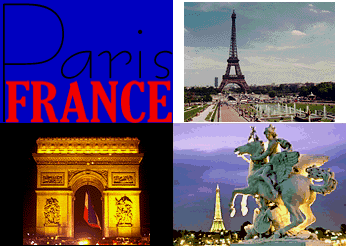 Paris--the City of Light, the City of Love--crowded, pricey and oft-visited,
but also the most magical city in France, and, for many people, in the
world.
Paris--the City of Light, the City of Love--crowded, pricey and oft-visited,
but also the most magical city in France, and, for many people, in the
world.
Despite a background
of revolution and enemy occupation, the city and its monuments have largely
been preserved. The French empire manifested the grandeur of state in
the architecture of its capital city. And no other European city has such
a lengthy history of urban planning: the city's wide and elegant boulevards,
lined with centuries-old chestnut trees; the broad plazas with fountains
and art; the many parks and gardens; and the temples of self-importance
all reflect a purposefulness and pomposity that is uniquely French.
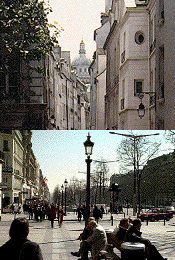 However,
a traveler who comes to Paris expecting either a museum of the city's
past or a theme park of quaint artistic ways quickly learns that Paris
is also a very modern city. Nearly 10 million people live in the metropolitan
area-one-fifth the total French population. However,
a traveler who comes to Paris expecting either a museum of the city's
past or a theme park of quaint artistic ways quickly learns that Paris
is also a very modern city. Nearly 10 million people live in the metropolitan
area-one-fifth the total French population.
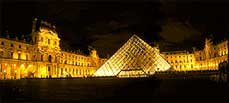
Key attractions in
Paris include the Eiffel Tower, Musée du Louvre, Notre-Dame de Paris,
Musée d'Orsay, L'Arc-de-Triomphe and the Champs-Elysées, as well as EuroDisney
and the palace of Versailles-both just outside the city.
 The
nightlife in Paris is legendary. Paris once defined the word "nightclub"
with Le Moulin Rouge, the Folies-Bergère and the Crazy Horse Saloon. Many
of these clubs are still in business and their Las Vegas-style shows still
attract crowds. Paris' other historic nightlife specialty is the jazz
club. In the first decades of this century, African American musicians
found Paris a more hospitable place to perform than the U.S., and there's
a tradition of excellent jazz in the city. The young and trendy are more
likely to frequent dance clubs and discos. The
nightlife in Paris is legendary. Paris once defined the word "nightclub"
with Le Moulin Rouge, the Folies-Bergère and the Crazy Horse Saloon. Many
of these clubs are still in business and their Las Vegas-style shows still
attract crowds. Paris' other historic nightlife specialty is the jazz
club. In the first decades of this century, African American musicians
found Paris a more hospitable place to perform than the U.S., and there's
a tradition of excellent jazz in the city. The young and trendy are more
likely to frequent dance clubs and discos.
|